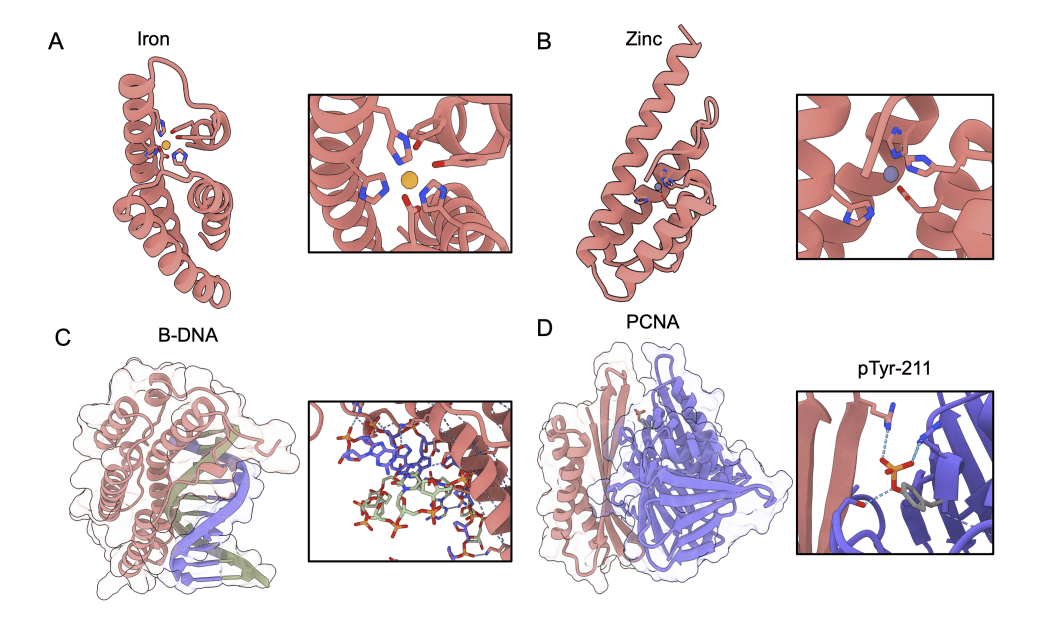
Boltzdesign1 adapts iterative structure-prediction-guided design to targets beyond proteins, including small molecules, nucleic acids, metal ions, and post-translational modifications. The workflow generates sequences, predicts their target complexes, and uses those scores to guide the next design cycle.
The article summarizes the authors' in-silico evaluations across ligand binders, protein-protein cases, and metal, DNA, and modified-protein sites. Reported analyses include structural confidence, cross-model consistency, docking scores, and interface geometry; they are computational benchmarks rather than experimental validation.
Ablation results suggest that extensive recycling and redesigning a fixed interface can sometimes produce less favorable candidates than simpler settings. The authors use these findings to motivate more stable, target-aware optimization and careful separation of design from scoring.
The post explicitly cautions that the method is under active development and its generated binders have not yet been experimentally validated. Flexible nucleic acids and multiple covalent modifications remain difficult, with future work proposed around templates, nucleic-acid alignments, and better optimization schedules.