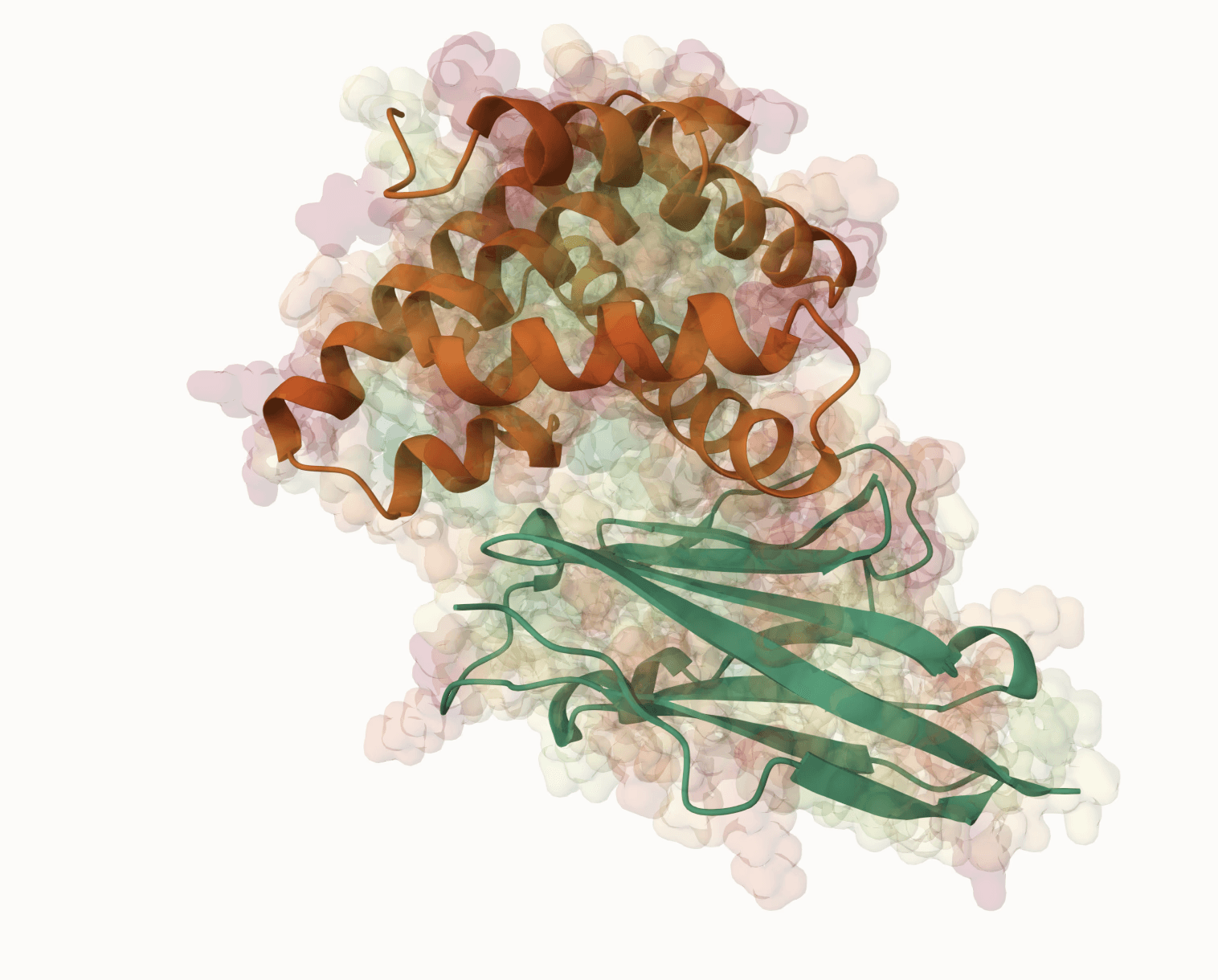
BoltzGen is presented as an all-atom generative model for designing proteins and peptides against a broad set of biomolecular targets. Its design process combines generation with structure reasoning, so candidate structures and target interactions are modeled together.
The workflow can use BoltzGen to generate a binder backbone, BoltzIF to propose a sequence, and Boltz-2 to refold and evaluate the resulting complex. Researchers can specify structural constraints, target binding regions, and residue-level design requirements.
The article describes experimental campaigns across nanobodies, proteins, peptides, small-molecule binders, and other target classes. Results vary between targets and modalities; the authors report successful binders in several settings while also noting limits and the computational cost of screening many candidates.
A multi-step filter ranks candidates by predicted structure, interaction measures, and diversity. The resulting designs are starting points for experimental tests, and the article notes that generated structures still require careful assessment and validation.
The post also describes four default design protocols tailored to protein, peptide, small-molecule, and nanobody targets, each with different filtering and structure-evaluation steps.