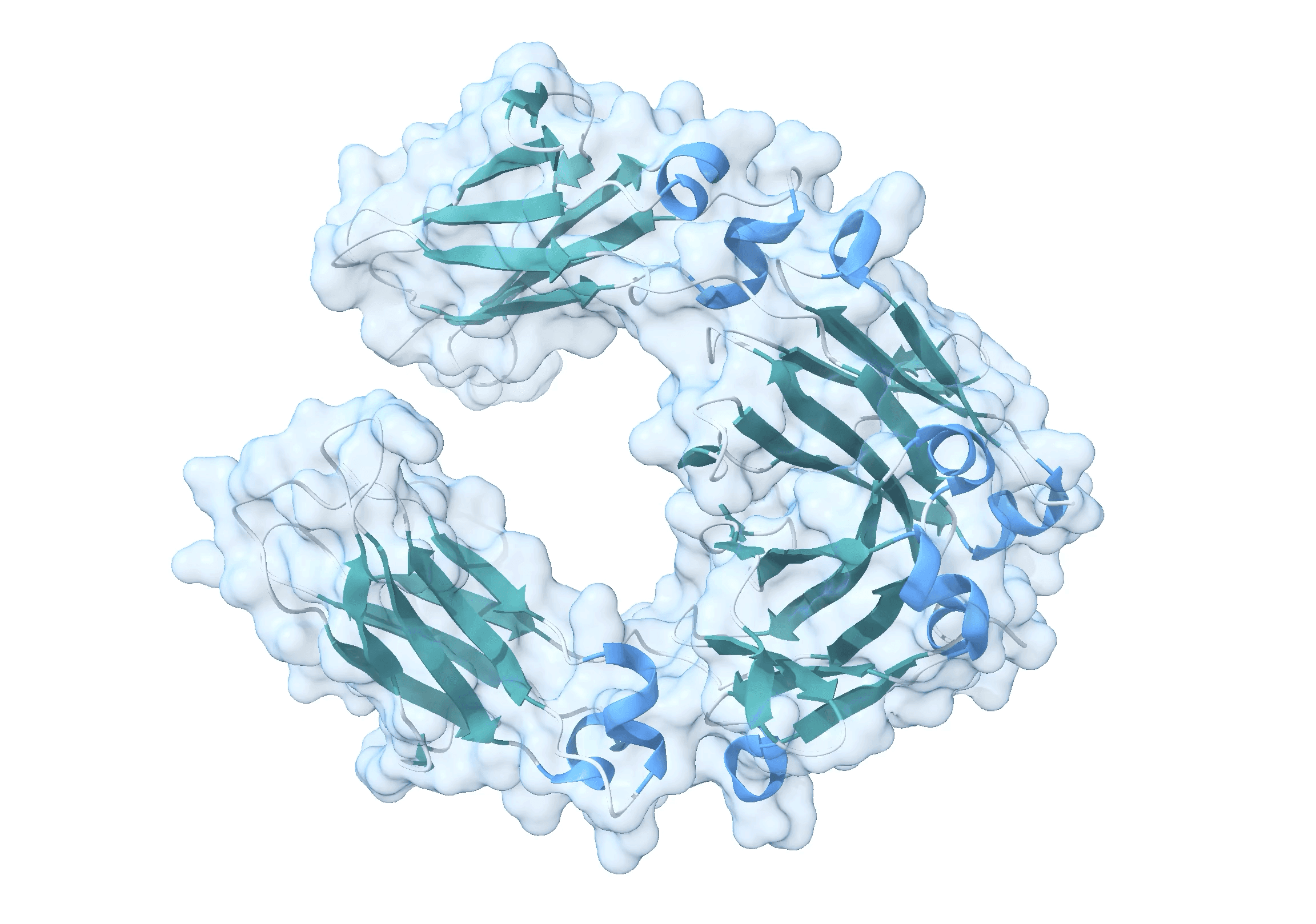
OpenFold3 is introduced as an openly available alternative in the AlphaFold3 class of structure prediction models. The article compares it across biomolecular modalities and notes that performance differs by task rather than showing one model winning across every category.
The reported comparisons show OpenFold3 approaching AlphaFold3 for some small-molecule and general structure tasks, while antibody-antigen docking remains more challenging. RNA prediction is highlighted as an area where the release performs particularly well.
The post discusses practical factors that shape benchmark comparisons, including training-data cutoffs and how many predictions a method samples for each input. The authors describe additional sampling as one possible route to stronger docking accuracy.
Looking ahead, the article points to structural physics, flexible conformational states, retrieval-supported sequence context, and explicit negative examples as areas that could improve future predictors. It also outlines using OpenFold3 through the Tamarind interface and reviewing confidence measures with the resulting structures.