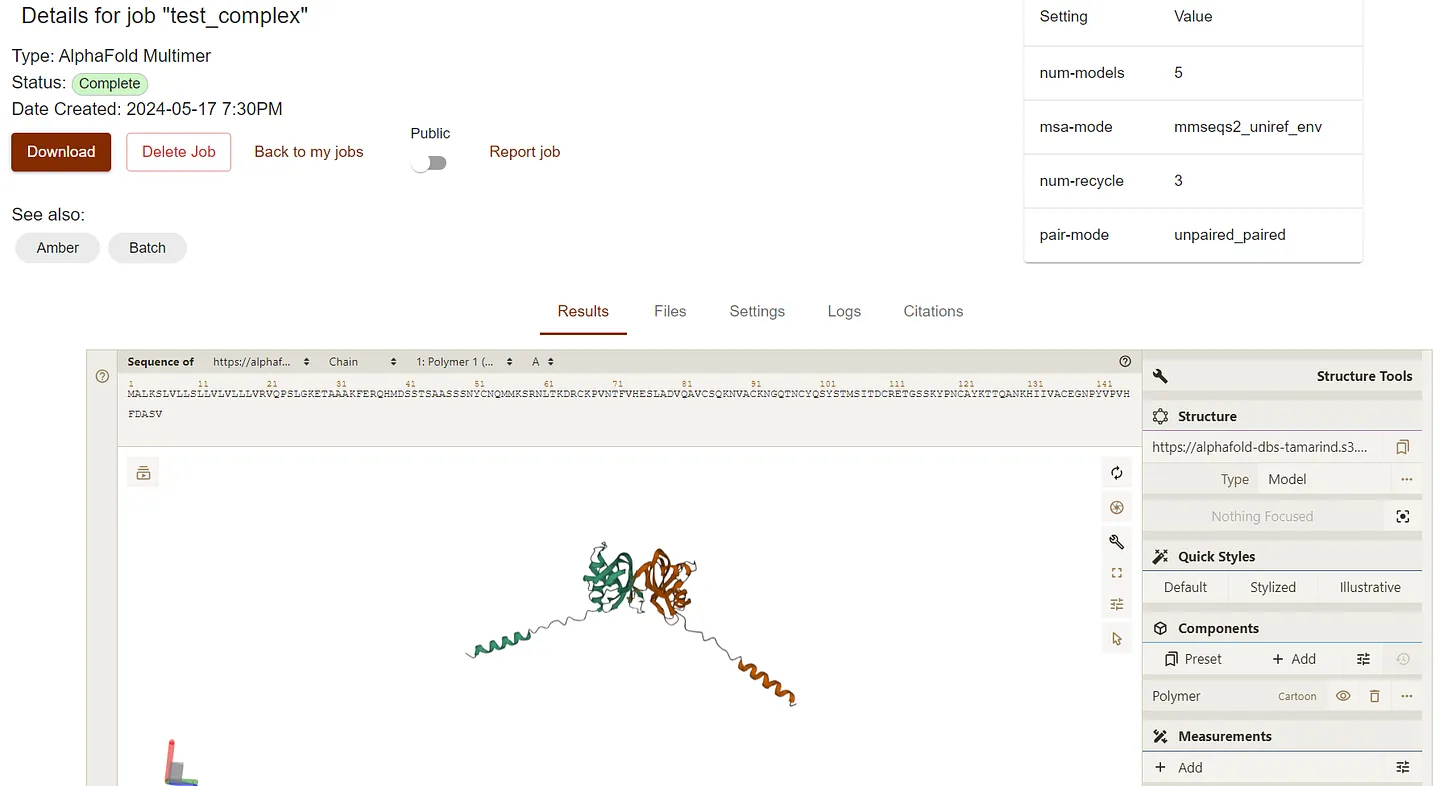
The article describes using complex structure prediction as a computational screen for protein-protein interactions. It focuses on ipTM, a confidence score that can help prioritize predicted complexes, while noting that false positives and implausible interfaces still require inspection.
The post cites prior uses of this approach in peptide discovery, antibody maturation, and plant-pathogen interaction studies. It presents predicted scores as screening evidence rather than direct measurements of binding affinity.
For larger screens, Tamarind's batch workflow runs many complex predictions in parallel. Users provide paired sequences and receive predicted structures and confidence metrics to help rank candidate interactions for follow-up.